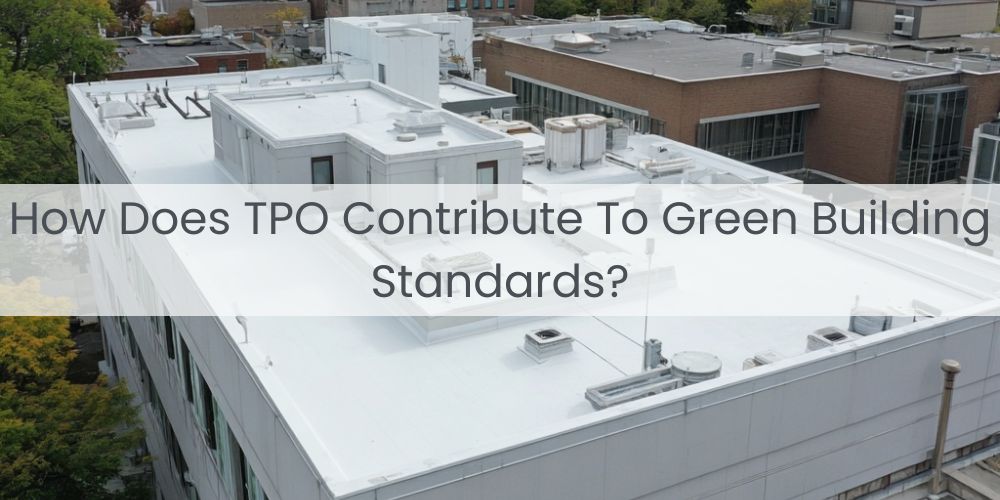
TPO roofing supports green building compliance by improving roof-level energy performance, reducing heat-island impact, and enabling documented material choices that align with common sustainability frameworks used in U.S. commercial construction. Commercial properties operate under tenant expectations, operational cost constraints, and ESG or certification targets that require building components to meet measurable performance and documentation standards. TPO roofing systems are used on projects where roof reflectance performance, envelope reliability, and material reporting contribute to green building scorecards and sustainability criteria used by owners, designers, and facility managers. Commercial roof assemblies are subjected to sustained solar exposure, daily thermal cycling, wind uplift, drainage stress, and rooftop mechanical congestion that can degrade performance if membranes, seams, and details are not engineered as a coordinated system. If roof assemblies are not designed to manage reflective behavior, seam integrity, insulation continuity, and drainage control, heat gain and moisture risk can propagate beneath the membrane surface and undermine both operational efficiency and long-term durability outcomes that sustainability programs evaluate. Once excessive heat is absorbed at the roof surface, it can increase cooling demand and peak energy use, and once moisture enters the roof assembly it can reduce thermal resistance, accelerate deterioration, and shorten service life, increasing replacement frequency and lifecycle impact. TPO roofing for green building standards focuses on measurable roof performance and verifiable project documentation, not generalized claims that a material is “eco-friendly” by default. TPO roofing for green building alignment is the process of installing a heat-welded thermoplastic membrane system with reflective surface options, defined attachment methods, compatible insulation detailing, and engineered flashing and drainage design to create a watertight roof assembly that supports energy and resilience objectives. Unlike generic sustainability positioning that treats green compliance as a marketing label, green building alignment requires that the roof system’s performance attributes and material selections can be substantiated through rated values, submittals, and project records used in certification and reporting workflows. Without correct system design, insulation discontinuity, poor transition detailing, and drainage deficiencies can preserve high heat transfer and increase repair frequency, reducing the measurable performance outcomes that green standards and owner sustainability targets depend on. TPO Roofing Contractor installs and maintains TPO roofing systems as documented performance assemblies, engineered to control roof-surface heat loading, preserve envelope reliability, and support green building compliance objectives across commercial buildings throughout the United States.
How Does TPO Roofing Support Green Building Criteria and Sustainability Compliance?
Green building outcomes deteriorate when roof systems increase energy demand, contribute to heat-island impact, or require premature replacement due to avoidable moisture-driven degradation. Solar exposure elevates roof surface temperatures, thermal cycling stresses seams and attachments, and rooftop equipment and traffic concentrate risk at penetrations and service zones where envelope failures can begin. On large low-slope commercial roofs, these forces act across wide areas, so small detailing deficiencies can translate into higher cooling loads, recurring repairs, and shortened service life that undermines sustainability goals tied to operational efficiency and durability. TPO roofing systems support green building criteria by limiting solar heat gain through reflective membrane surfaces, maintaining watertight continuity through heat-welded seams, and preserving insulation performance through drainage control and compatible detailing that reduces moisture entry and thermal bypass. When reflective performance, seam continuity, insulation continuity, and drainage behavior are coordinated, the roof contributes to lower peak cooling demand, reduced heat loading at the building envelope, and more stable long-term performance—outcomes that align with common green building evaluation logic focused on energy, resilience, and lifecycle durability.
The TPO green building compliance pathway creates the following system-level performance relationships:
- Reflective TPO membrane surface → limits solar heat absorption → roof surface temperature remains lower during peak sun
- Lower roof surface temperature → reduces conductive heat flux → cooling load and peak energy demand decrease in cooling-dominant operation
- Heat-welded TPO seams → form continuous membrane joints → moisture entry does not initiate at field seams under thermal cycling
- Watertight membrane continuity → prevents insulation wetting → thermal resistance remains stable over time
- Designed drainage geometry and maintenance access controls → evacuate water and reduce ponding → ponding stress does not accelerate seam failure or insulation saturation
- Documented rated values and project records → substantiate roof performance attributes → green building compliance and certification review risk is reduced
Each of these outcomes results from coordinated roof-system design and documentation decisions, ensuring that TPO roofing functions as a measurable performance and compliance layer rather than a passive membrane selected without sustainability verification.
What Documentation and Rated Values Prove TPO Roof Sustainability Performance in Green Building Reviews?
Green building compliance succeeds or fails at the documentation layer because certification and ESG workflows require verifiable evidence that links the installed roof system to recognized performance criteria and traceable material records. Project teams lose sustainability credit value when reflective performance is implied rather than demonstrated, when the installed membrane cannot be tied to a recognized rating listing, or when submittals do not clearly map the roof assembly (membrane, insulation, attachment method, and details) to the compliance pathway used by the owner or certifying body. TPO roofing supports green building review only when the membrane product is identifiable, its rated reflectance performance is documented under an accepted rating framework, the roof assembly scope is captured in submittals and closeout packages, and maintenance assumptions that preserve performance (clean surface condition, functional drainage, controlled rooftop access) are addressed as part of the operational record. If these artifacts are missing or inconsistent—such as mismatched product names, incomplete invoices, unclear installed thickness, or absent rating references—the roof can still perform well in the field while failing the review standard that governs certification or reporting. Documented TPO sustainability performance is therefore a control chain: product identity → rated attributes → installed scope evidence → closeout records → operational preservation. The goal is to make roof-level sustainability claims auditable, so energy and durability outcomes are treated as substantiated building attributes rather than unverified marketing language.
The TPO green building documentation pathway creates the following system-level performance relationships:
- Manufacturer product identification → ties membrane to a specific SKU → installed roof can be traced to rated attributes
- Third-party rating listing → provides verified reflectance and related values → compliance reviewers can validate performance thresholds
- Rated reflectance values → support roof-surface heat control claims → energy-performance logic is anchored to measurable inputs
- Submittals and shop drawings → define assembly scope and detailing intent → installed configuration matches compliance assumptions
- Invoices and delivery records → confirm installed materials and quantities → project evidence supports audit and certification review
- Closeout package and O&M documentation → establishes maintenance controls that preserve performance → reflective and watertight behavior remain consistent over time
- Clear scope boundaries for penetrations and transitions → prevent undocumented exceptions → compliance risk does not hide in interface details
- Documented maintenance access controls → reduce puncture and seam-stress incidents → durability outcomes align with lifecycle sustainability expectations
Each of these outcomes results from coordinated specification, procurement, installation, and closeout decisions that convert TPO roofing from a “green-leaning” material choice into a verifiable, review-ready sustainability component with traceable performance and lifecycle reliability.
Have a question about an upcoming project?
When Should a Commercial Building Engage TPO Roofing Contractor to Support Green Building Standards?
If a commercial property is pursuing green building certification, ESG reporting targets, or tenant-driven sustainability requirements, the roof assembly must function as a documented performance component rather than a material chosen on reputation alone. Indicators such as planned certification submissions, portfolio-level energy and heat-island commitments, upcoming roof replacement tied to sustainability scorecards, repeated leak repairs that threaten durability credits, chronic ponding that increases lifecycle risk, or unclear product documentation from prior roof work can signal that the roof needs a compliance-aligned evaluation before decisions are locked in. Buildings should also engage TPO Roofing Contractor during design, tender, or pre-construction planning, because reflectance performance, insulation continuity, drainage geometry, penetration detailing, and record traceability must be coordinated at the same stage if green building outcomes are expected to be verifiable instead of implied. A green-building-aligned TPO review examines two things simultaneously: (1) whether the roof system is engineered to deliver measurable energy and durability performance, and (2) whether the project will have the documentation chain required for certification and sustainability review. This includes verifying the specified membrane’s rated reflectance pathway, confirming assembly scope and insulation continuity assumptions, reviewing seam and flashing design at penetrations and edges, ensuring drainage behavior supports long-term thermal resistance, and defining rooftop access and maintenance controls that preserve reflective performance and watertight continuity. It also includes building a traceable closeout record, such as product identification, rating references, submittals, installed-scope evidence, and O&M documentation that reviewers and owners can audit. For projects in design or tender, this process validates that the selected TPO system and details match the owner’s compliance pathway and that the submittal package will support review without ambiguity. For existing buildings, it identifies whether cleaning, drainage correction, seam and flashing reinforcement, documentation recovery, targeted restoration, or full replacement is the technically appropriate path to protect energy performance and lifecycle durability outcomes. Engaging TPO Roofing Contractor at the evaluation and documentation stage is a risk-management decision that aligns roof performance with verifiable sustainability criteria, reduces certification review friction, and protects long-term building value across commercial properties.